
Patients ask us this at almost every aligner consultation, and the honest answer is that Bar Orthodontics offers both because they are good at different things. Dr. Ehab Bar co-founded the Moon Aligner System, so you should know that going in. He is also a certified Invisalign provider and uses it regularly. Here is how he explains the difference to patients sitting in the chair.
What they have in common
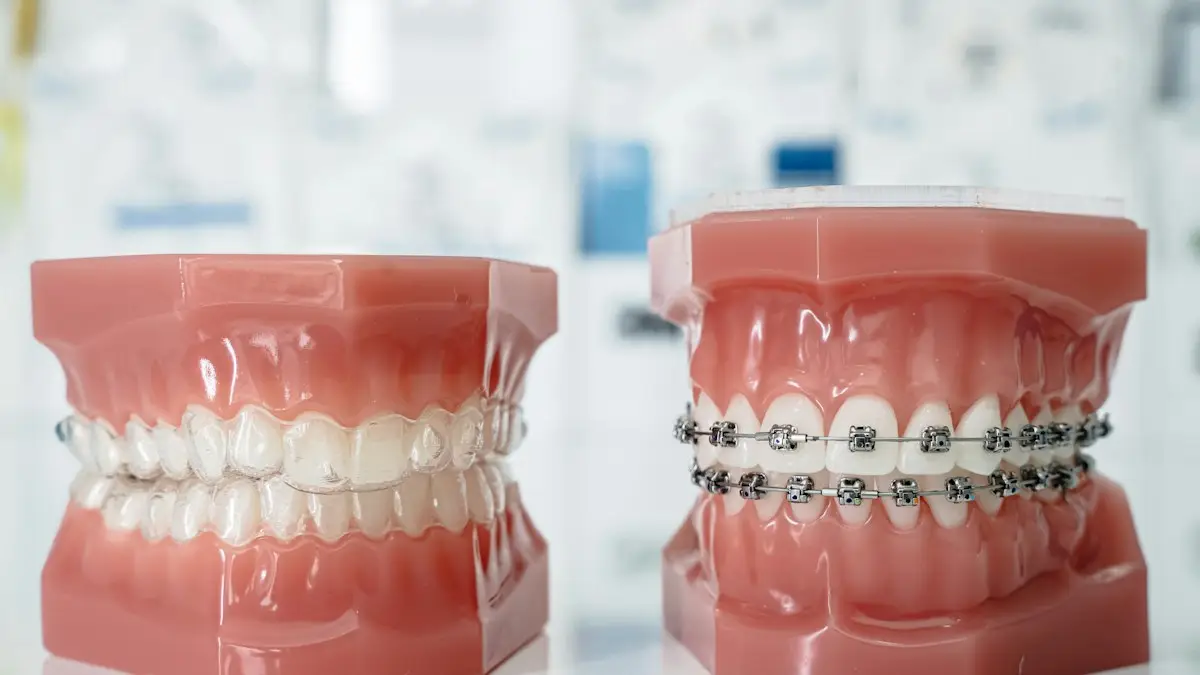
Both are clear, removable aligners made from medical-grade plastic. Both move teeth with a series of trays, each shaped a little differently from the last. Both use small tooth-colored attachments bonded to a few teeth to give the plastic something to grip. Both are worn about 22 hours a day, come out for eating and brushing, and are nearly invisible in conversation. Both are planned from the same digital scan we take at your first visit. For a mild to moderate case, a patient would be hard pressed to tell them apart in daily life.
Where Invisalign is strong
Invisalign has been on the market since the late 1990s and has treated more patients than every other aligner brand combined. That history matters: its SmartTrack material and its treatment-planning software have been refined through millions of cases, and there is more published research on Invisalign outcomes than on any competitor. For crowding and spacing in the mild to moderate range, for relapse after earlier treatment, and for patients who want the brand they already know, Invisalign is a dependable choice and we recommend it often.
Where aligners in general fall short
Every aligner, Invisalign included, is weakest at the same handful of movements: rotating round teeth like canines and premolars, pulling a tooth down from the gum line (extrusion), and tipping the roots of the front teeth (torque). The plastic simply has a hard time gripping a round tooth or pulling against the direction it wants to slip. In conventional aligner treatment these movements are where cases stall, where extra rounds of refinement trays get ordered, and where some patients end up switching to braces to finish.
What Moon Aligners do differently
The Moon Aligner System was designed around exactly those weak points. Its patented features change the geometry of the tray and the attachment so force is delivered where the tooth actually needs it, rather than where the plastic happens to touch. In practice that means rotations finish on the first set of trays more often, extrusions hold, and front-tooth torque can be planned without resorting to braces. Dr. Bar is Moon’s Chief Clinical Officer and plans every Moon case at Bar Orthodontics himself rather than sending it to an outside technician, which also shortens the time between your scan and your first tray.
The trade-off is history. Moon is newer than Invisalign and does not yet have decades of published outcome data behind it. Dr. Bar’s own case experience with it is extensive, and the biomechanics it uses are well understood, but if you place a high value on the longest track record, that is a fair reason to lean toward Invisalign for a case either system could handle.
How Dr. Bar chooses between them
After the scan and 3D cone beam image, he looks at three things. First, which specific movements your case needs; if it includes rotations, extrusion, or significant torque, Moon usually wins. Second, how complex the case is overall; the more complex, the more Moon’s advantages matter, and the more likely a conventional aligner case would end in refinements. Third, your own preference once you understand the difference. If both would work equally well, he will say so and let you pick.
Cost, time, and insurance
At Bar Orthodontics the fee for Moon Aligners and Invisalign is in the same range for a comparable case, and insurance treats them identically. Total treatment time is similar for simple cases. For complex cases Moon is often shorter because it needs fewer refinement rounds, each of which adds a few months in conventional aligner treatment.
What about mail-order aligners?
We do not offer them, and we would steer you away. No orthodontist examines your bite, your roots, or your gum health before teeth start moving, and we regularly see patients who need corrective treatment afterward. Any aligner system is only as good as the diagnosis behind it.
See both at your consultation
If you are weighing aligners, the quickest way to decide is to let Dr. Bar look at your scan and tell you which system he would use on his own family with your bite. The consultation is complimentary. Call (972) 772-2500 or book online. Bar Orthodontics is at 2861 Ridge Road, Suite 109, Rockwall, TX, serving Rockwall, Heath, Fate, Royse City, Rowlett, Forney, and the surrounding communities.
Learn more about the Moon Aligner System and Invisalign at Bar Orthodontics, or book a complimentary consultation to find out which fits your case.