What Board-Certified Orthodontist Means, and Why It Matters
If you search for the best orthodontist in Rockwall, you will find general dentists who offer Invisalign, orthodontists who finished a residency, and orthodontists who went one step further and earned board certification. Those are three different levels of training, and the difference is not obvious from a website or a waiting room. This page explains what each one means so you can make the comparison yourself.
Dentist, orthodontist, board-certified orthodontist
A general dentist completes dental school and can legally offer braces or aligners after a weekend course or a manufacturer’s certification. Many are skilled clinicians, but orthodontics is not what they trained in, and the aligner company’s software, not the dentist, is often doing the treatment planning.
An orthodontist completes dental school and then a two- to three-year accredited residency devoted entirely to moving teeth and guiding jaw growth. Every orthodontist is a specialist by training; not every orthodontist is board certified.
A board-certified orthodontist is a Diplomate of the American Board of Orthodontics, the only orthodontic specialty board recognized by the American Dental Association. Certification is voluntary. It requires passing a written examination and then a clinical examination in which the orthodontist presents finished cases from their own practice, with records before and after, for a panel of examiners to grade against objective standards. Many orthodontists never take that step. Dr. Ehab Bar is one of them.
What the clinical exam actually tests
The ABO clinical examination is not a quiz about textbooks. Examiners measure the finished cases with a scoring system that checks tooth alignment, marginal ridge heights, buccolingual inclination, occlusal contacts, interproximal contacts, root parallelism on the panoramic X-ray, and overjet. Points are deducted for every millimeter off. The orthodontist also has to defend the diagnosis and treatment plan for each case. Passing means an outside panel has verified that the orthodontist’s finished results, not just their intentions, meet the specialty’s standard.
Why it matters for your treatment
Diagnosis before appliances. A board-certified orthodontist is trained to find the problems a scan alone misses: a narrow upper jaw in a child, an impacted canine that will not erupt on its own, a bite that looks fine but is grinding down the back teeth. Those are the cases where choosing the wrong provider costs years, not months.
Finishing standards. Straight front teeth are easy. A bite that fits, roots that are parallel, and a result that holds are the hard part, and they are exactly what the board exam grades. You are more likely to get a finished result rather than an improved one.
Judgment on the hard calls. Whether to extract, when to start a child, whether a case is really an aligner case or needs braces, when to refer for surgery. These are decisions that come from training and verified experience, not a software recommendation.
Accountability. Diplomates recertify. Board certification is a standing commitment, not a plaque from residency.
What it does not mean
Board certification does not mean a practice is expensive, slow, or old-fashioned. At Bar Orthodontics it costs the same as treatment elsewhere in Rockwall County, and it comes with 3D printing on site, same-day digital scans, and the Moon Aligner System that Dr. Bar co-founded. It also does not mean a non-certified orthodontist is a bad one. It means the certified one has had their work checked by the specialty’s own examiners, and you do not have to take their word for it.
How to verify it
Any patient can confirm a doctor’s status in the American Board of Orthodontics’ online directory of Diplomates. Dr. Bar is listed. If a provider advertises as “certified” and is not in that directory, ask what the certification refers to; it is often a product certification from an aligner company, which is a sales credential, not a clinical one.
About Dr. Bar
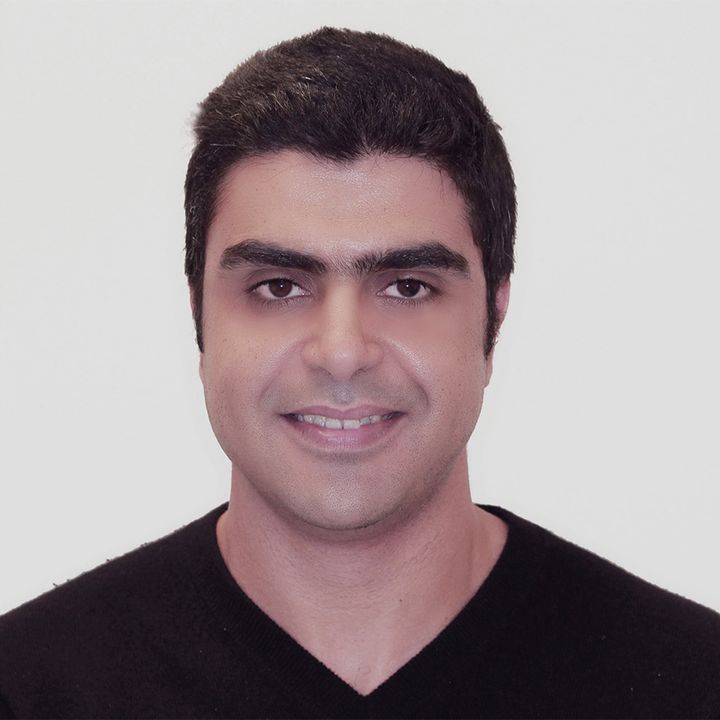
Dr. Ehab Bar completed his orthodontic residency at the UCLA School of Dentistry, followed by a fellowship in advanced craniofacial anomalies at the UCLA Craniofacial Center, and served on the UCLA faculty teaching orthodontic residents. He holds three orthodontic patents, co-founded the Moon Aligner System and serves as its Chief Clinical Officer, and is a Diplomate of the American Board of Orthodontics. Bar Orthodontics was named a 2026 Top Doctor by Living Magazine.
On this page
Complimentary consultation
Exam, digital scan, and your exact fee in writing. No obligation.
Book online(972) 772-25002861 Ridge Road, Suite 109, RockwallReady to find out what your smile needs?
The consultation is complimentary: a digital scan, Dr. Bar's recommendation, and your fee in writing. No referral needed.